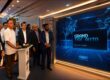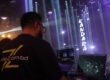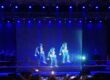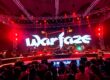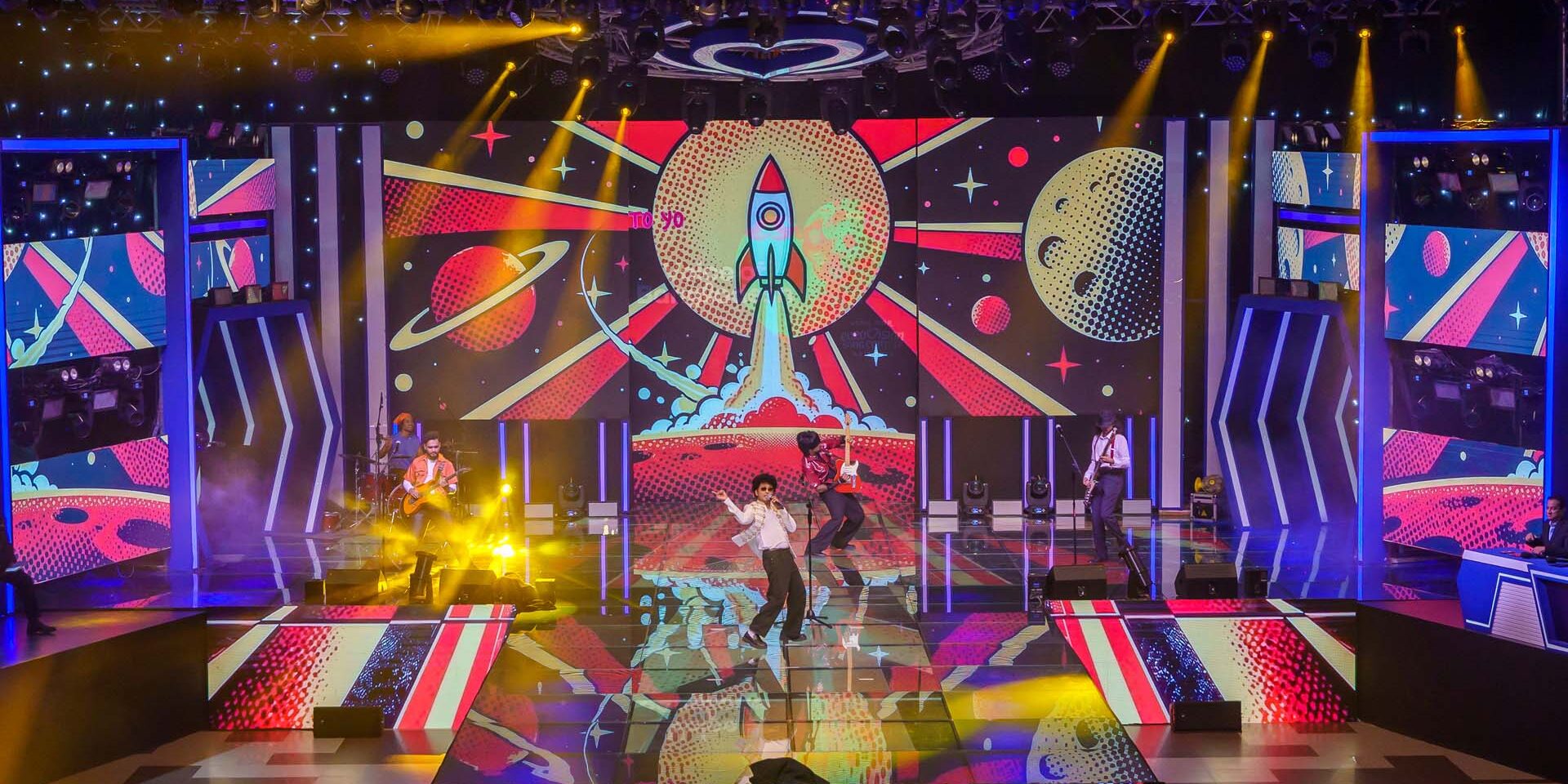
Studio Z BD produced the visuals and the visual and lighting colour guide for all ten competing songs at Voice of Bangladesh. The show picked Bangladesh's first act for Eurovision Song Contest Asia. It ran on 30 September 2026 at the International Convention City Bashundhara (ICCB), Dhaka.
Studio Z founder Zunayed Sabbir Ahmed designed the looks and ran them as live VJ. Beatmosphere won and goes to Bangkok on 14 November.
Project snapshot
- Event: Voice of Bangladesh | Song for Eurovision Song Contest Asia
- Date: 30 September 2026
- Venue: International Convention City Bashundhara (ICCB), Dhaka
- Format: ten competing songs and two guest songs, a live audience of just under 2,000, live broadcast and streaming
- Production and broadcast: Bongo and NTV
- Studio Z scope: visual and lighting colour guide, visual production for ten songs, live VJ
- Visual lead and VJ: Zunayed Sabbir Ahmed
- Result: Beatmosphere, "Tumi Ele", first. Pulak Adhikary, "Anari Majhi", second. Vintage Theory, "BOOMERANG!", third.
Why was this show different from a normal concert?
Eurovision sets a strict European benchmark. The production had to meet it. Bongo hired the best operators in Bangladesh to do exactly that.
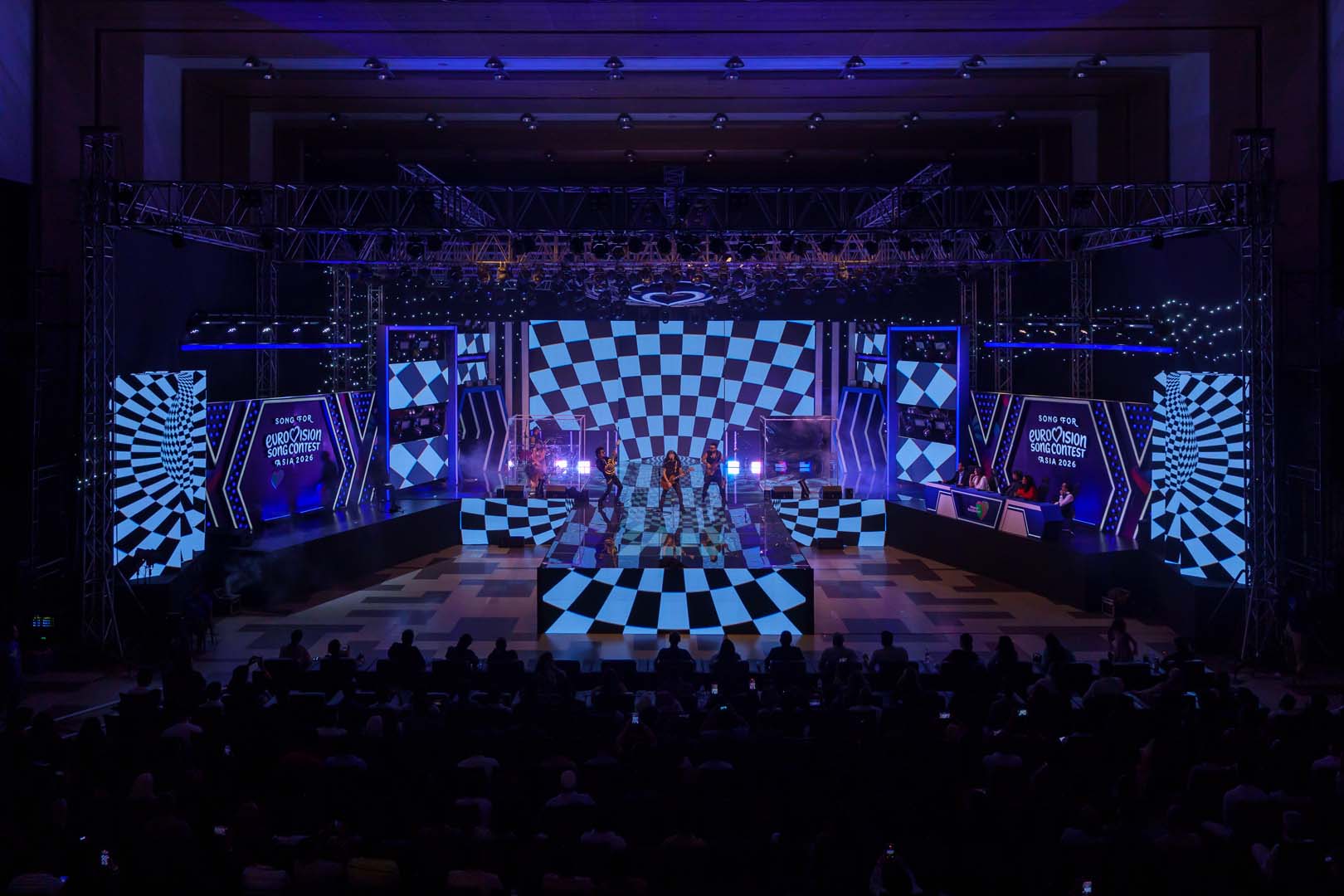
The world watched too. The show streamed on Eurovision's YouTube channel, and the result combined a 40% jury vote, a 40% Bangladeshi audience vote and a 20% Rest of the World vote. Every act had to look right to people far outside the room.
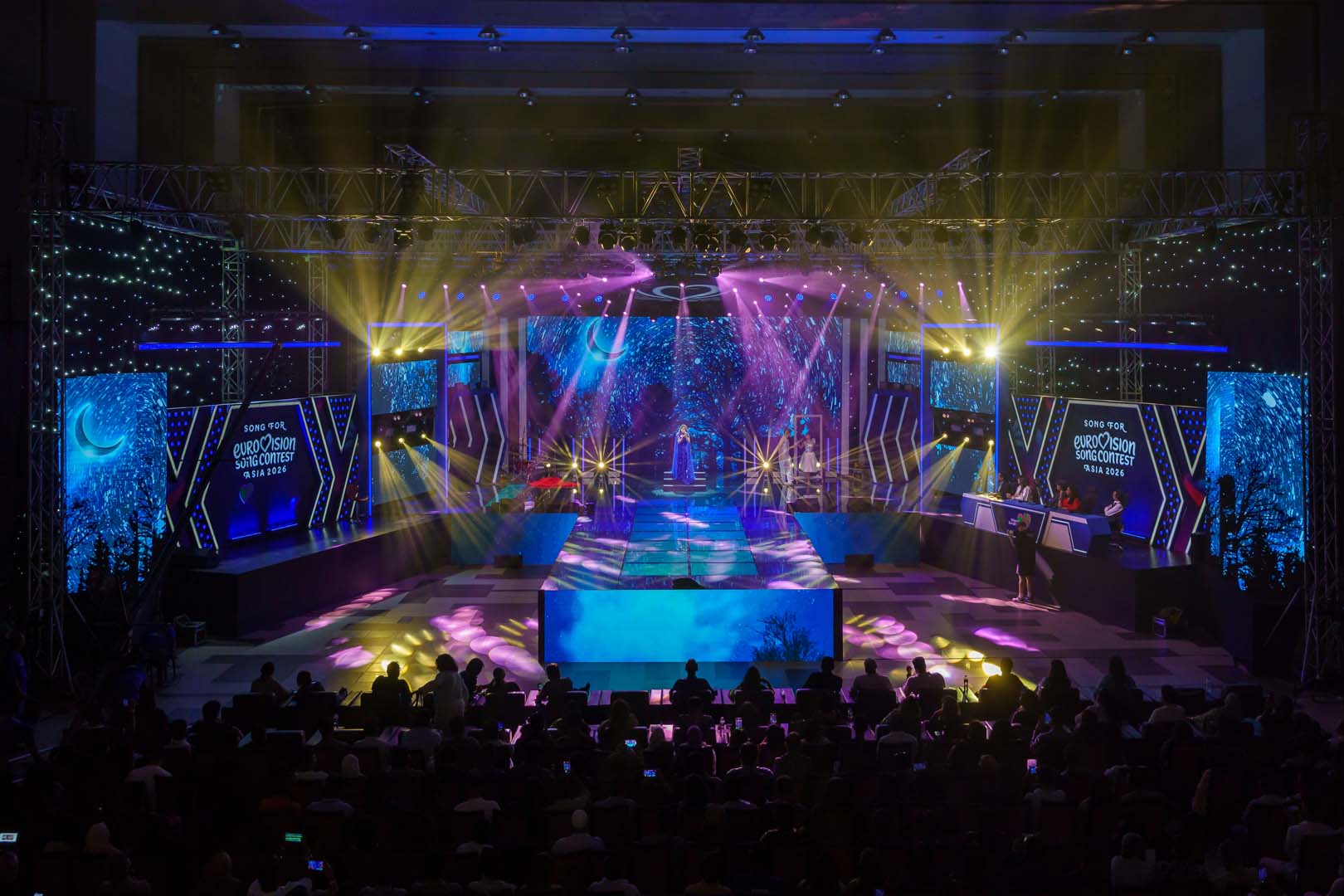
Two shows ran at once. A long production table ran the live broadcast, the web stream and the app stream. In front of it, lighting, sound, visuals and DJ ran the live event for the room. Both sides worked in step all night.
That is the pressure Studio Z built for.
What did Studio Z deliver?
- A visual and lighting colour guide for every song, shared with the lighting department
- Visual production for ten competing songs, each built as a finished video
- Live VJ operation across the show
- Media server design and operation on Resolume
How were ten different looks built?
Studio Z started every song from its own tone, melody, colour and theme. Each became a mood board and a colour guide.
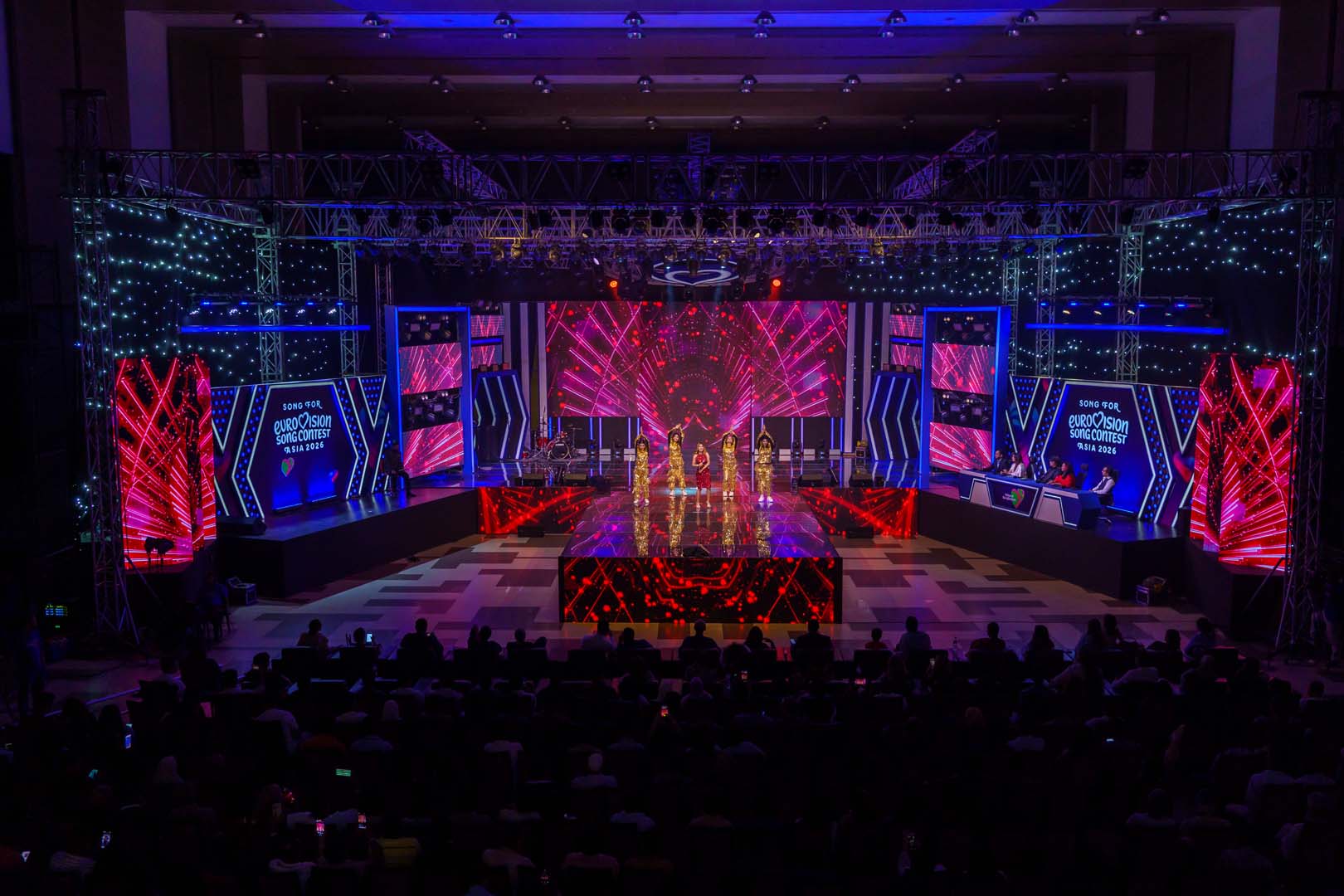
The guides went to the director for approval, then to the lighting designers. Their input went in. Studio Z then aligned the visuals with the costume and choreography plan. Some songs changed completely as a result.
Zunayed also spoke with a good number of the artists directly, one to one. Their ideas went in at the start of production. That is why the ten looks do not repeat.
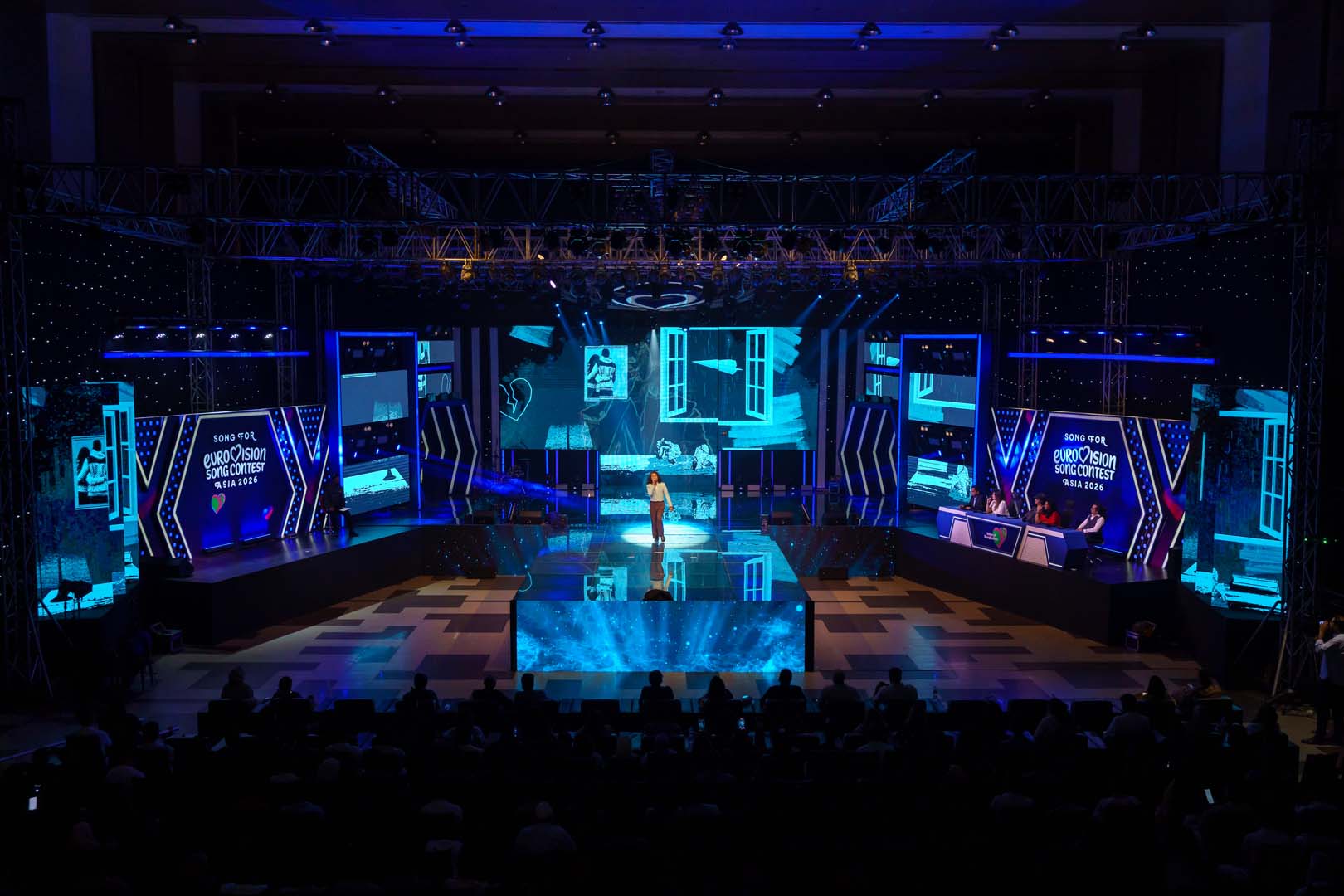
The tools changed song by song. Most looks ran through the Adobe suite. Vintage Theory's visuals came from ChatGPT images, Google Flow video and an After Effects composite. The Kushiyara Waves' "Mashuk Dhiyan" was built as a MadMapper timeline, rendered, then composited into the final visual.
Different songs got different pipelines. None got a template.
What was the technical setup?
Resolume was the media server platform. Three systems ran the show.
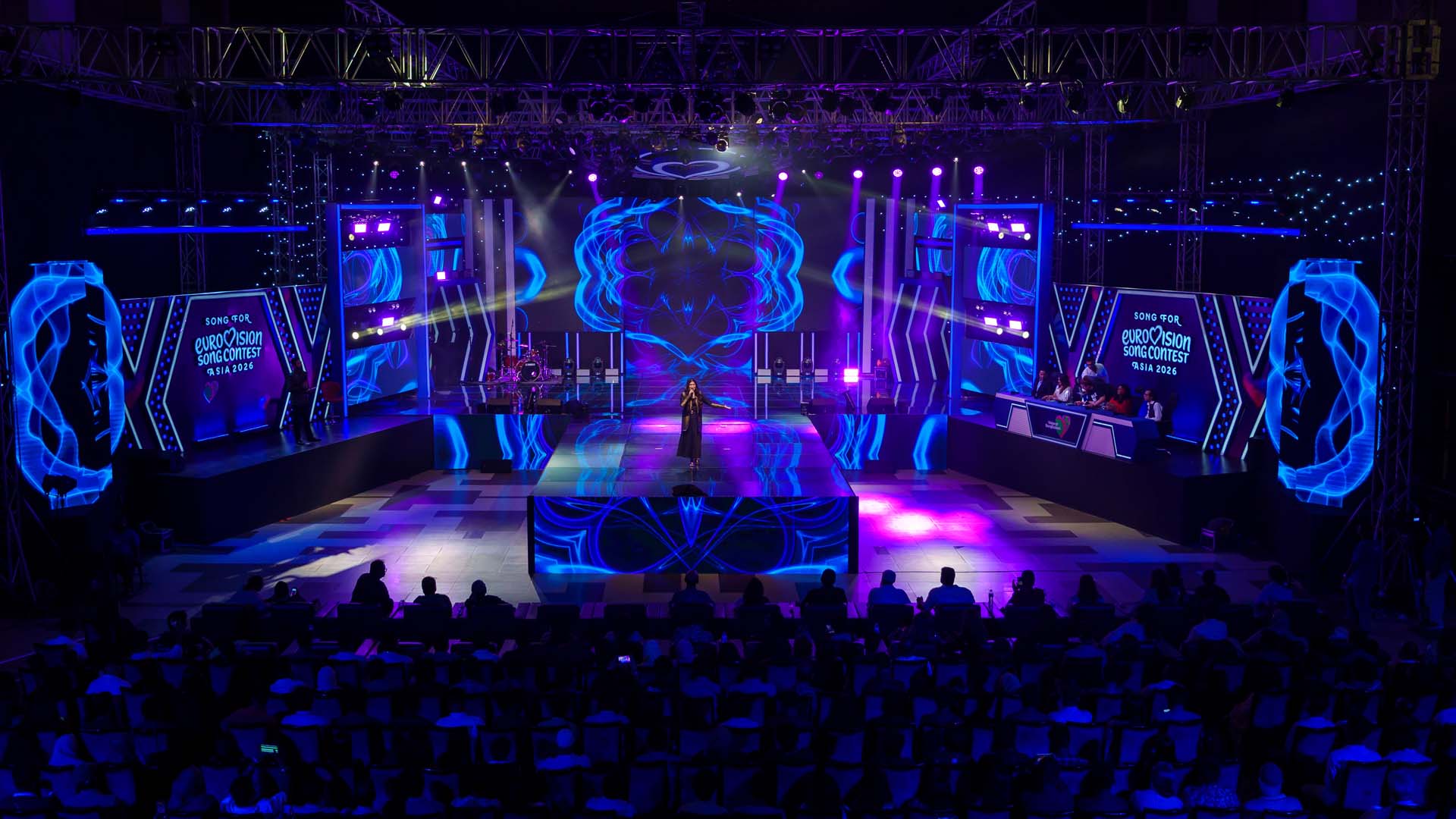
- Main stage: a primary server patched to six LED processors
- Backup: a second server patched to the same six processors
- Side LED: a separate server patched to one processor
Plugins including Chaser and Cube3D ran across the systems.
Every track was pre-recorded and performed as a minus-one, with only the lead vocal live. Each song's visual ran as a rendered video file. Zunayed controlled a bank of live effects on top.
The camera set the brightness. His right hand stayed on the master opacity fader all night while he watched the camera monitor and rode the LED level to what the camera saw.
What happened on stage?
Ten acts, ten looks. Beatmosphere ended their song in a held pose with their logo on the LED behind them. Zunayed had pitched that frame to the band as their press photo. It is the photo that ran when they won.
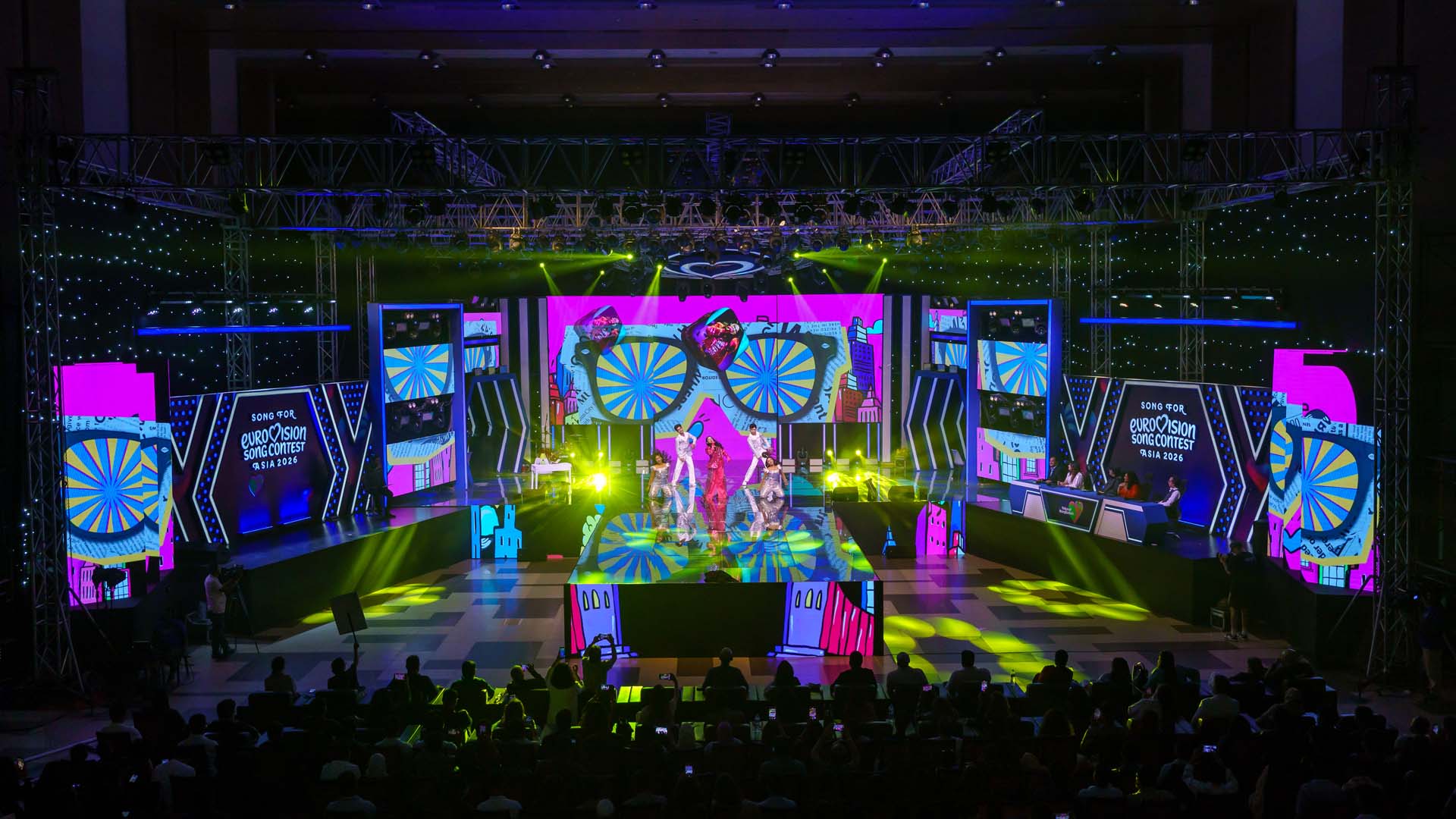
Bangladesh stood on Eurovision's stage for the first time and had to look as good as it could. The internal goal was simple. Every one of the ten songs had to be the best song, the one that showed Bangladesh at its best.
Credits
- Director: Wahidul Islam Shuvro
- Production and broadcast/stream: Bongo and NTV
- Visual and lighting colour guide, visual production: Studio Z BD
- VJ: Zunayed Sabbir Ahmed
- DJ: Md Wahid
- Lighting design and operation: Mohammad Ridwan, Md Yasin
- Sound design and mix: Kawsar Mahmud
- Audio logistics: SP Rhythm
- Structural design and installation: Shahinur Parvez
- LED: Green Vision
- Official photography: Raw Xposure
Frequently asked questions
Who produced the visuals for Voice of Bangladesh?
Studio Z BD. Founder Zunayed Sabbir Ahmed designed the visuals and ran them as live VJ.
What did Studio Z do at Eurovision Asia Bangladesh?
Studio Z made the visual and lighting colour guide, produced the visuals for all ten competing songs, and operated them live.
When and where was Voice of Bangladesh held?
On 30 September 2026 at the International Convention City Bashundhara (ICCB), Dhaka.
Who won Voice of Bangladesh?
Beatmosphere, with "Tumi Ele". The group represents Bangladesh at Eurovision Song Contest Asia in Bangkok on 14 November.
What software ran the visuals?
Resolume ran on three systems. Content came from the Adobe suite, MadMapper and Google Flow.
Were the visuals live or pre-rendered?
Both. Each song's visual was a rendered video. Live controls and effects were operated on top during the show.
Can Studio Z handle visuals for a live music competition?
Yes. Studio Z designs, produces and runs the visuals end to end, from colour guide to live operation.
Your show is coming. Make it unforgettable.
Planning a show the world will watch? Message Studio Z on WhatsApp or write to info@studioz.com.bd.
More on this show: zunayed.com/blogs for the personal story, studio-z.ca/blog for the VJ workflow.