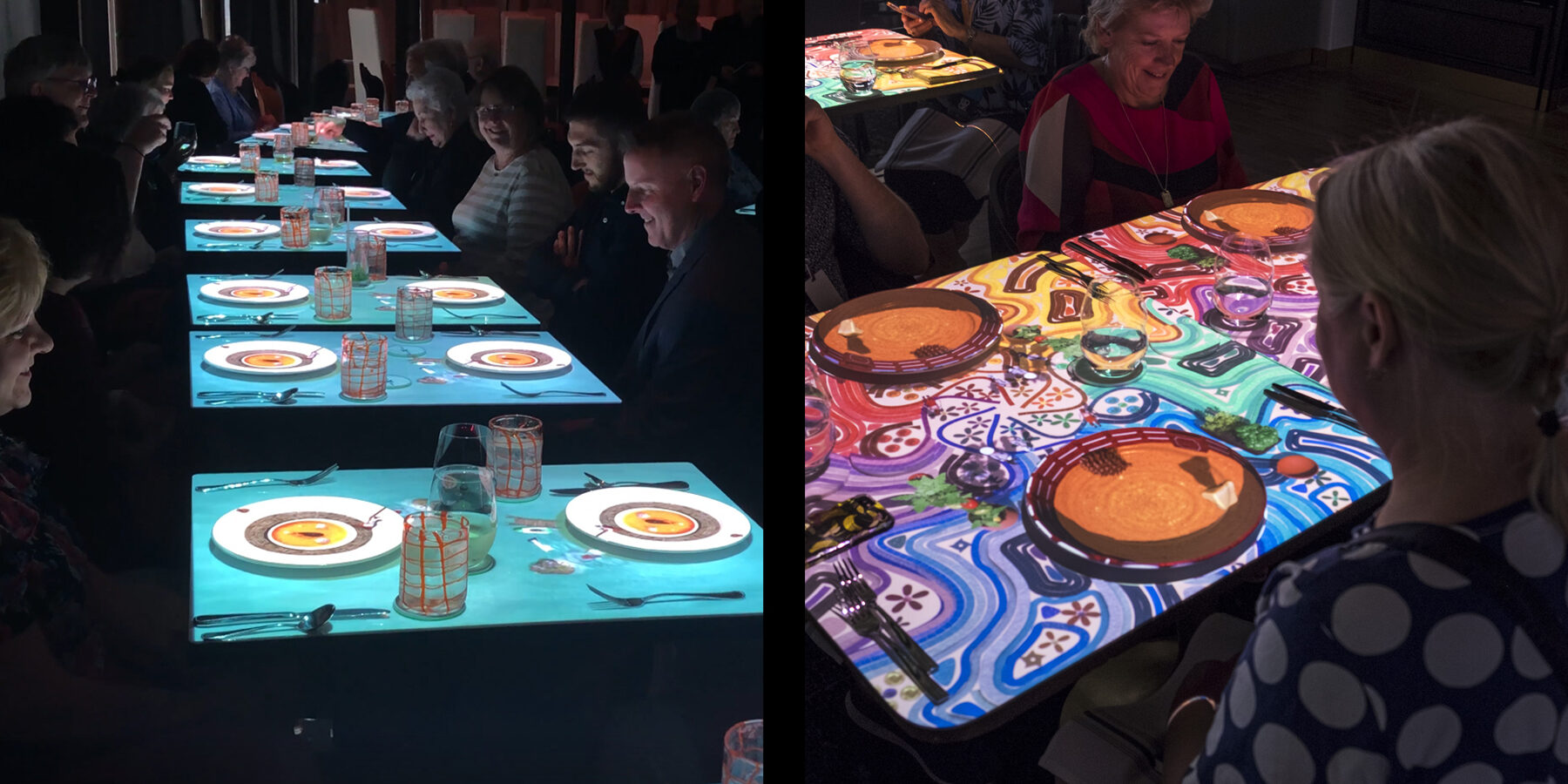
Projection mapping accents can transform a simple dinner into a multi-sensory immersive event — making your restaurant memorable and shareable.
Intro
You know how people scroll their feeds and pause when they see something unexpected? That’s your opportunity. Imagine walking into a restaurant where the plates, tables, walls — even the air around you — subtly respond with visuals, light, and movement. That’s immersive dining with projection mapping, and it’s no longer just for big stage shows.
In this blog, you’ll discover practical ideas, real-world examples (with links), and how Studio Z can help bring this to life in Bangladesh.
Why It Matters for Restaurant & Lounge Owners
- Memorable & shareable: Customers will pull out phones and post — free marketing for you
- Differentiation: In a crowded F&B market, immersive visual experience becomes your unique selling point
- Higher spend & dwell time: Guests stay longer, order more courses or drinks when they’re engaged
- Brand story integration: You can weave in your brand visuals, menu themes, or campaign messages through visuals
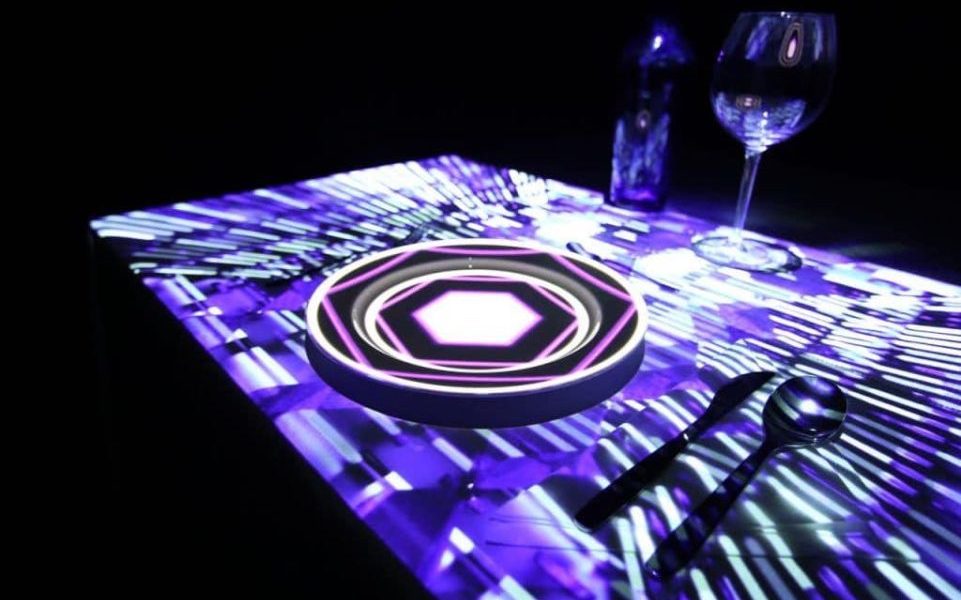
6 Practical Applications in Dining Spaces
Tabletop / Plate Projection
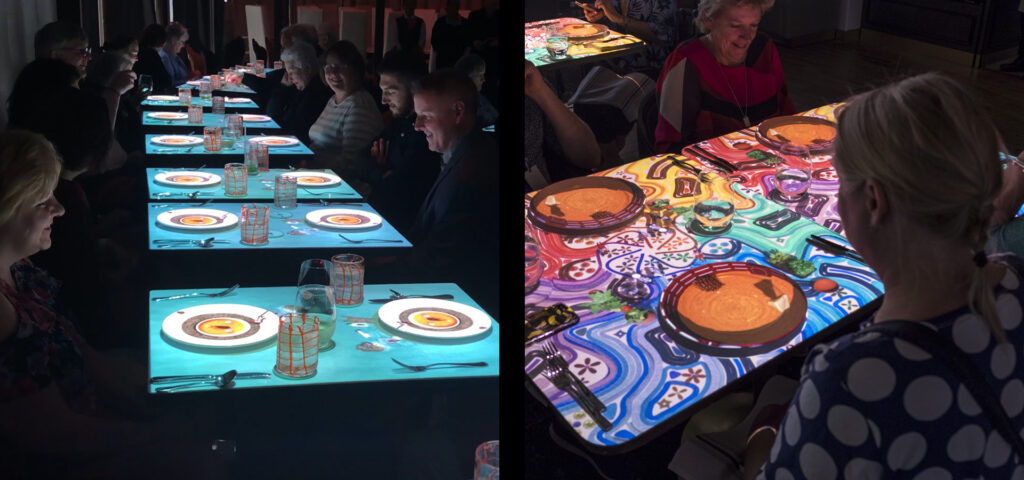
Project animations onto plates or the table surface as courses arrive (fire, waves, garden, etc.). E.g. Le Petit Chef projects a tiny animated chef cooking on your plate. (Skullmapping)
Impact: Guests feel a direct connection to the food presentation.
Considerations: Use short-throw projectors. Align precisely so food doesn’t obscure crucial visuals.
Feature-wall Micro-Shows
During key moments (dessert, special dishes), animate visuals on the wall behind diners — extending the story beyond the table.
Impact: Adds theater and builds emotional resonance with the meal.
Real example: The Journey 360 experience maps restaurant interiors to reflect changing scenes per course. (HeavyM)
Ambient Ceiling / Overhead Projections
Project abstract visuals (stars, slow-motion nature, particles) on ceiling or overhangs to envelope the diners in an atmosphere.
Impact: Subtle but powerful, shifts perception of the space.
Example: Many immersive dining promos on YouTube use ceiling mapping as background to the main table show. (YouTube)
Synchronised DMX Lighting Accents
Tie in DMX lighting zones (under-table uplights, wall washes, overhead beams) that shift in color / intensity in sync with the projection show.
Impact: Blends visuals and lighting seamlessly, avoiding jarring transitions.
Tip: Use Art-Net / sACN and timecode to sync.
Laser Accents for Key Moments
For dessert reveal, toast, or announcement, small laser beams or sparkles can punctuate the moment — but must be safe and directed properly (no direct beams to audience).
Impact: Creates “wow” peaks in the experience.
Caution: Always follow local laser safety regulations, trained operators only.
Real-World Links & Proofs
- YouTube — Immersive Dining Table Projection:
The Radiant Table video shows a full dinner mapped experience.
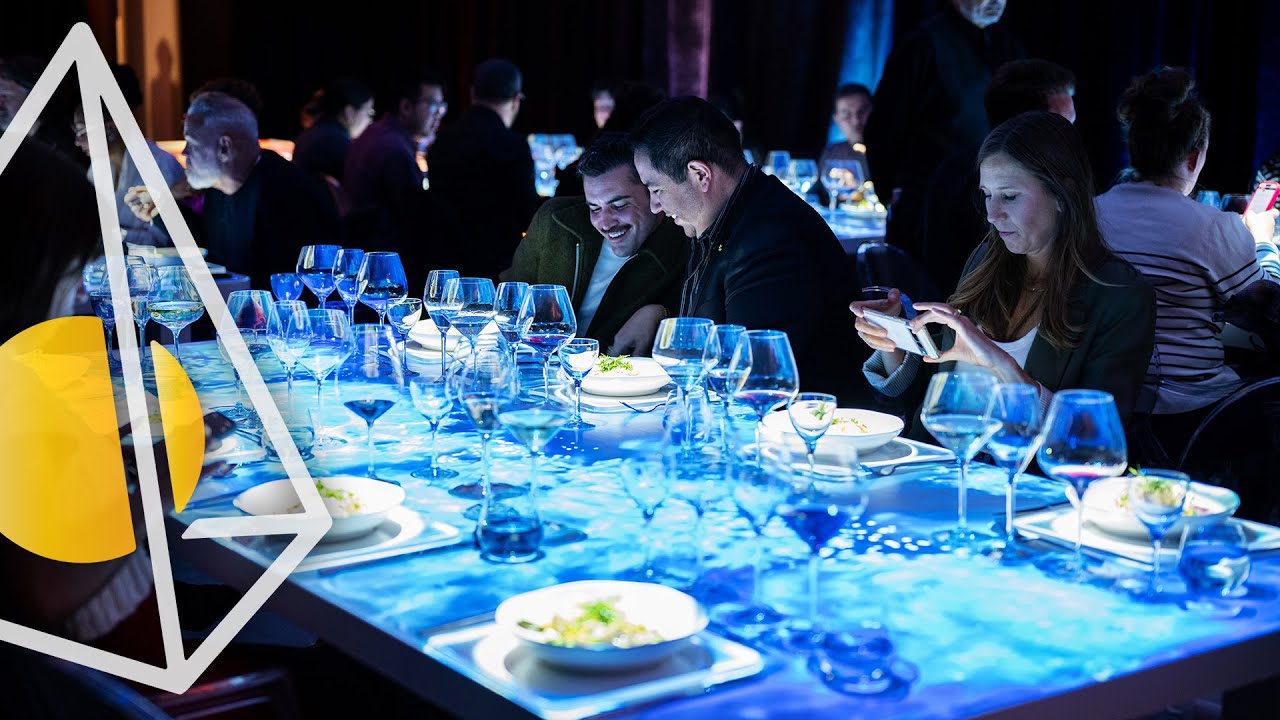
The Radiant Table Immersive Projection Dinner Experience
- YouTube — Pro L Projection Dining: high-quality projection mapping on restaurant interiors. (YouTube)
- Article — Michelin-Starred Le Bernardin: used projection mapping to elevate an exclusive private dinner. (AVIXA Xchange)
- Le Petit Chef: one of the earliest viral examples of animated plate projections. (Skullmapping)
Tech & Control Snapshot
- Projectors: short-throw, ultra-short throw, edge-blended multi-projector setups
- Media server software: Resolume, MadMapper, HeavyM etc.
- Control & sync: use DMX512, Art-Net / sACN, timecode / MIDI for synchronization
- Calibration & masking tools: warp meshes, projection masks, content mapped to shape
Budget Tiers & ROI
| Tier | Rough Cost Estimate* | What You Get | Potential ROI / Impact |
| Starter | modest setup for 1–2 tables + ambient mapping | simple visuals, smaller projection zones | noticeable increase in “wow” factor, incremental upsell |
| Pro | multi-table, feature-wall + lighting sync | medium show sequences, richer interactivity | higher spend per guest, social media buzz |
| Premium | full immersive show for entire space, lasers, interaction | full-blown theatrical dining | destination status, can justify premium pricing |
* Cost depends heavily on equipment quality, content, and labor for installation & programming.
Why Studio Z
At Studio Z, we’re experts in turning venues into storytellers. Whether you have one table or a full banquet hall, we design the complete immersive journey — projection, lighting, laser, interactivity — all from concept to launch.
If you’re a restaurant or lounge owner who wants to transform dining into experience, reach out to us today. Let’s map your vision into reality — from Dhaka to beyond.
📩 Contact Studio Z for your immersive design consultation.
Book Now https://wa.me/message/VT6OGWRZQMQ7F1
WhatsApp: +8801730651732
FAQs
Q1: Do projection systems disturb diners with noise or heat?
A: Modern projectors can be very quiet, and proper ventilation + distance planning keeps heat away from guests.
Q2: How often should content be updated?
A: Ideally every 3–6 months to keep novelty, depending on your themes and marketing calendar.
Q3: What about maintenance downtime?
A: Plan scheduled checks nightly or weekly; use backup projectors to avoid blackouts.
Q4: Is laser safe in a restaurant?
A: Yes — if only low-power, audience-safe classes are used, and local regulations are followed with trained operators.
Q5: Will this drive high electricity bills?
A: Slight bump, but power for projectors and LED lighting is relatively small vs HVAC or kitchen loads.Q6: Can small restaurants do this or only big ones?
A: Even small spaces can start with one table or one wall; you scale up as ROI comes in.