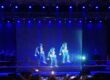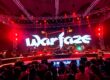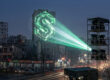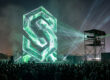
Every major corporate event has one defining moment. The one people talk about in the elevator the next morning. The one that ends up in the brand’s anniversary highlight reel five years later. For over a decade in Bangladesh, that moment has increasingly been owned by projection mapping — and the brands behind it know exactly why.
Grameen Phone, Samsung Bangladesh, Teletalk, Nestlé, Sony Bravia, Unilever’s Lux, BSRM Steel, the National Parliament of Bangladesh. These aren’t small names experimenting with novel tech. These are some of the most sophisticated marketing operations in the country — and they’ve all chosen projection mapping when it mattered most.
The question worth asking is: why?
Because Screens Have a Ceiling — And Brands Have Outgrown It
Every event in Bangladesh today has an LED backdrop. It’s practically standard. And that’s exactly the problem. When everything looks the same, nothing stands out. Brand managers spend months planning a product launch, a rebranding reveal, or a milestone celebration — and then set it against the same backdrop their competitor used three months ago.
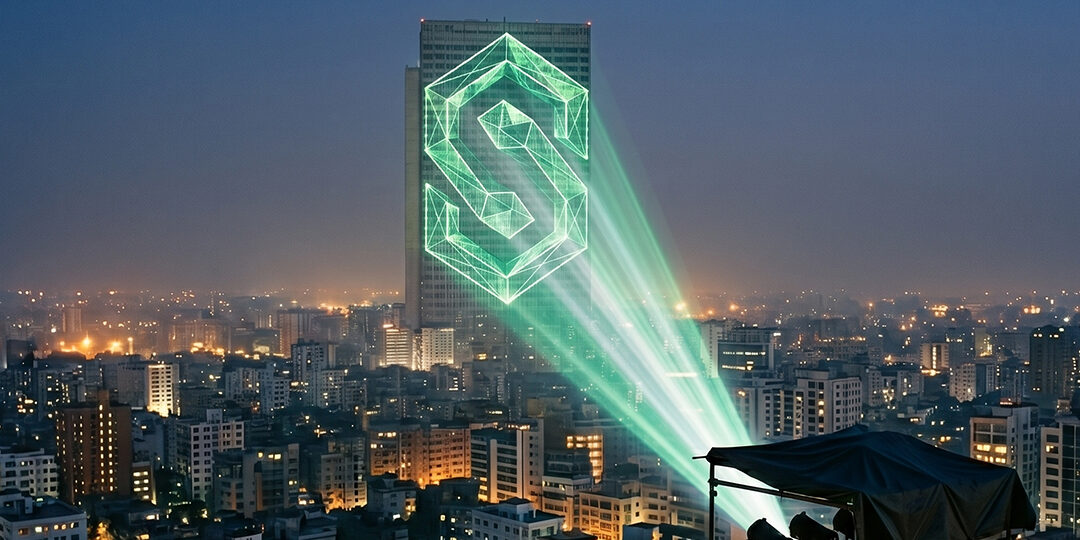
Projection mapping breaks that ceiling. Instead of projecting onto a flat screen, you project onto a custom three-dimensional surface — built in the exact shape of your logo, your product, your brand identity. Light follows the contours of the surface. Movement, depth, and storytelling combine into something a flat screen physically cannot replicate.
When Samsung Bangladesh launched the QLED and Galaxy S5 with Studio Z BD, the technology wasn’t just a backdrop — it was the event. When Nestlé Bangladesh created the Aloki immersive experience, projection mapping wasn’t a feature of the night. It was the night.
The Three Moments When It Makes the Most Impact
In Studio Z BD’s 100+ show portfolio across Bangladesh, the same three use cases keep appearing — not because they’re the only ones, but because they consistently deliver the highest return on the investment.
The first is a brand or product launch. When you’re introducing something new to the market, first impressions are permanent. A projection-mapped reveal — where your product or logo emerges from light and motion rather than just appearing on a screen — creates an emotional response that standard AV cannot. Stakeholders, media, and guests remember it. They share it.
The second is a rebranding reveal. Teletalk has worked with Studio Z BD twice for exactly this reason. When a brand’s identity changes, the reveal moment carries enormous weight — both internally with your team and externally with the market. A projection mapping show turns what could be a slide presentation into a ceremonial moment. It signals that the change is serious, considered, and worth celebrating.
The third is a milestone or celebration. A 10th anniversary. A convention. A national event. These moments already carry emotional weight — projection mapping amplifies it into something genuinely moving. The Ministry of Sound experience — Bangladesh’s first ever 3D projection mapping show — still gets referenced years later as the benchmark for what live events can be.
What Actually Goes Into a Show
One of the most common misconceptions brand managers bring to early conversations is that projection mapping is primarily a technology expense. It isn’t. It’s a production expense — similar in structure to commissioning a film or a live performance.
At Studio Z BD, every show begins with understanding the brand: what the client is trying to say, to whom, and in what setting. From there, a custom surface is designed — a physical structure built to the client’s logo or brand shape, up to 24×16 feet — and the visual content is produced to map precisely onto that surface. Sound is composed or curated to sync with the visuals. Lighting is choreographed to complement the projection.
On event day, Studio Z BD’s full crew arrives approximately four hours before showtime. Two 10,000-lumen large-venue projectors are positioned and calibrated. MadMapper and Resolume Arena handle the precise mapping and playback. When the moment comes, everything runs seamlessly — because every contingency has been rehearsed.
The result is a 3–5 minute show that typically plays on loop throughout the event, or is held for a single peak reveal moment at the right point in the program.
Why Nearly Every Major BD Brand Has Done This At Least Once
The portfolio across Studio Z BD’s 100+ shows reads like a cross-section of Bangladesh’s corporate landscape. Robi and RanksTel alongside Grameen Phone in telecom. Sony Bravia and Singer alongside Samsung in consumer electronics. Omera Petroleum and Bajaj Pulser in automotive. Gensuline in pharma. FSIBL in banking. The German Embassy Dhaka and the National Parliament in government.
This isn’t coincidence. When a technology consistently delivers results across this many categories and this many client types, word travels. Event managers who worked on the GP activation recommend Studio Z BD to the Samsung team. Marketing directors who saw the Teletalk rebranding share the reference with counterparts at other brands. The track record perpetuates itself.
The Bottom Line
Bangladesh’s biggest brands don’t choose projection mapping because it’s trendy. They choose it because it works — and because in a market where events increasingly blur together in post-event feeds and memories, they need the moment people remember.
Studio Z BD has produced those moments more than 100 times. The question is whether your next event deserves to be one of them.
If you’re planning a product launch, a rebrand reveal, a milestone celebration, or a major corporate event in the next quarter, this is the conversation to start now.
📲 WhatsApp Studio Z BD to discuss your event → +880 1730 651732